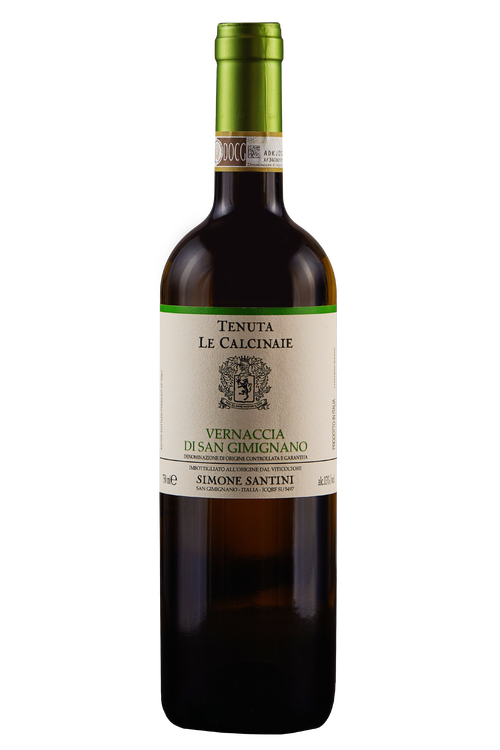
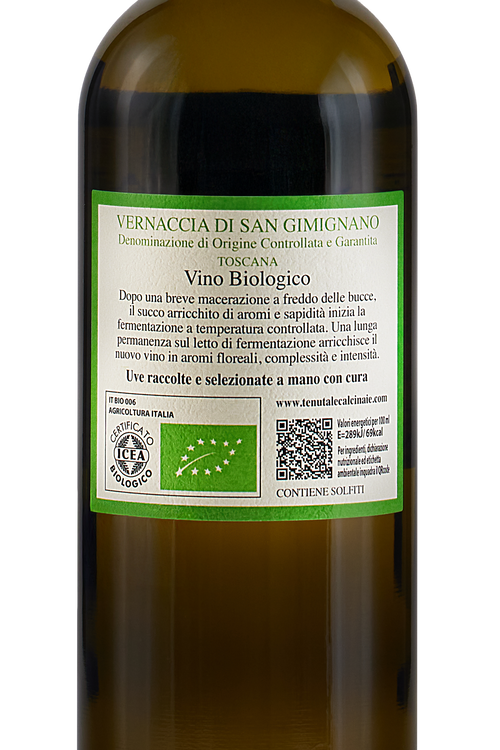
Vernaccia di San Gimignano is a dry white wine produced by Tenuta Calcinaie in Tuscany, part of the Vernaccia di San Gimignano DOCG. Tenuta Calcinaie is located just three kilometres from San Gimignano, in the province of Siena. It was founded by Simone Santini in 1986, who remains the owner and a passionate winegrower. In 1989, Simone Santini planted the first hectare with Vernaccia vines, the vineyard now known as Vigna ai Sassi, and produced the first vintage of Vernaccia in 1995. That year is also significant because it marked the start of the estate’s full implementation of organic farming practices. Over the years, alongside his growing passion for this Tuscan land, Simone Santini has expanded the estate, which since 2006 has boasted a new, fully underground cellar, where the wines age in complete safety from fluctuations in temperature and humidity. Vernaccia di San Gimignano is a native Italian variety with a very ancient history: its production is documented as far back as 1200, and the first official record in which it features dates to 1276, the Ordinamenti della Gabella of the municipality of San Gimignano, which demonstrate that the trade in this wine was already flourishing and profitable at the time. It is, in fact, in the San Gimignano area that Vernaccia has found its ideal habitat. An important feature that also characterises Tenuta di Calcinaie is the soil: it consists mainly of limestone and marine fossils, dating back to the Pliocene era. The estate owes its name, ‘Calcinaie’, to these particular limestone-rich soils. Thus was born Tenuta Calcinaie’s Vernaccia di San Gimignano, a white wine made from 100% Vernaccia, which, following alcoholic fermentation, matures on the lees until the spring following the harvest. 100ml E=289kJ/69kcal
In the glass, the wine appears a pale straw yellow. On the nose, it reveals intense notes of crisp fruit, green apple and white flowers. On the palate, it is dry, with a dynamic mouthfeel thanks to its acidity and savoury undertones.
A bottle to uncork for an aperitif with friends, as well as to pair with shellfish and fish dishes, including river fish, or elaborate first courses.
To fully appreciate its style, this wine should be served at a temperature of 10–12°C.