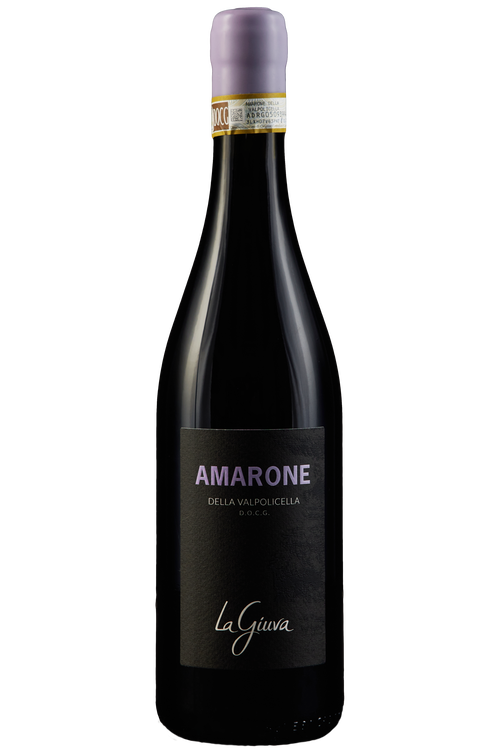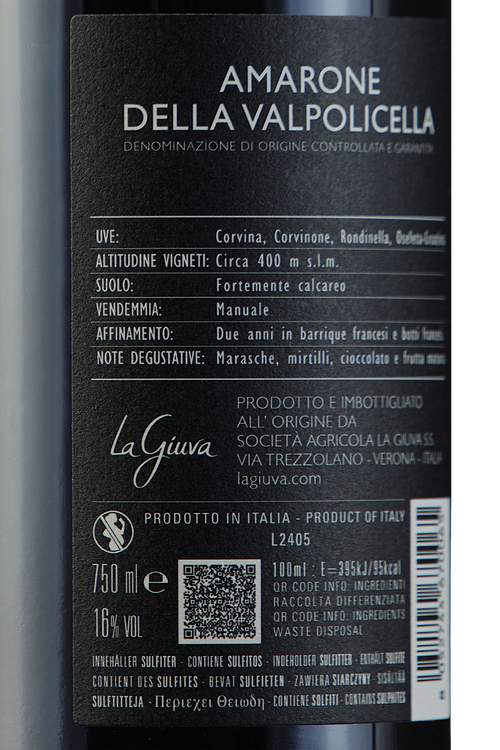
First among them is the Amarone, made from 50% Corvina, 20% Corvinone, 25% Rondinella, and 5% Oseleta and Croatina. Following tradition, the grapes undergo careful selection in the vineyard, then dry in crates before being vinified in December. After a natural cold maceration during the winter, they are heated to First of all, Amarone, which is made from grapes such as 50% Corvina, 20% Corvinone, 25% Rondinella, 5% Oseleta and Croatina. As per tradition, after careful selection in the vineyard, the grapes are dried in boxes and vinified in December. After maceration at the natural, cold winter temperature, they heat up to trigger the long fermentation, maintaining a constant temperature of 24°C. The subsequent automatic fulling cycle, lasting at least 20 days, ensures the right compromise between maceration and extraction of everything the grapes can yield. Fermentation then ends in new barriques, in which the wine remains at least 24 months. Bottle aging completes the work. 100 ml: E=395 kJ/95 kcal
Intensely ruby-colored and nearly opaque, Amarone de La Giuva reveals itself on the nose with ethereal notes, austerity, and finesse, featuring aromatic hints of sour cherries, blueberries, and chocolate, along with a remarkable persistence of ripe fruit. On the palate, it is soft and enveloping, with silky tannins and just the right freshness that prolongs the sip in the finish. The characteristic sweetness of the tannins creates a deep atmosphere, intensifying the pleasure of tasting this great wine.
The perfect wine to enjoy with braised dishes, roasts, and game, as well as cured meats and cheeses. It pairs particularly well with local traditional dishes like pasta and beans.
To fully appreciate its style, this Amarone Classico should be served at a temperature of 16–18°C.